The modern agricultural landscape is going through radical changes, fueled by technological advances which promise to improve efficiency and effectiveness. Agriculture drones are a game changer, especially in the field crop management. These drones are designed specifically for agricultural purposes and offer farmers the opportunity to lower labor costs, improve precision when spraying, as and increase the yield of their crops.
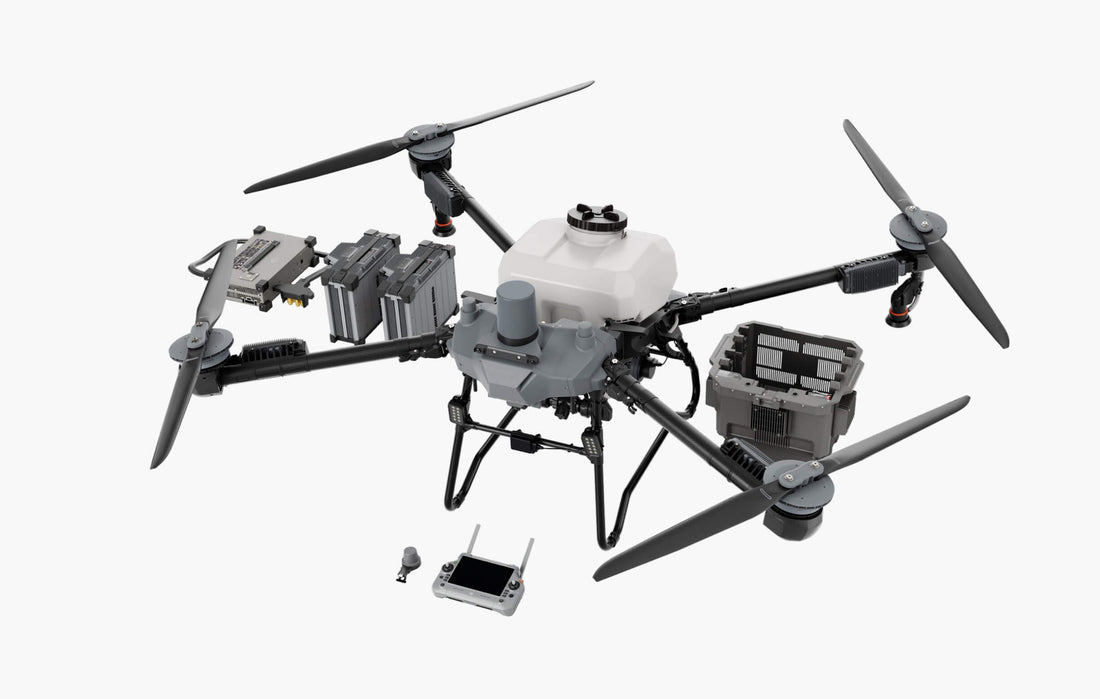
The Rise of Agriculture Drones
Drones for spraying or agriculture have become indispensable tools for the farming industry. These drones are equipped with the latest technologies which allow them to carry out many tasks including spraying pesticides and herbicides over large areas of crop. Agriculture drones are more precise than conventional methods. They ensure that the proper amount of product will be applied precisely where it is required, minimising emissions and reducing waste.
The use of agricultural drones is an excellent asset in large-scale farming operations because manually spraying crops may take a lot of effort and time. Drones are able to cover vast areas in a short time, which saves farmers time and money. They also allow them to concentrate on other essential aspects of managing farms.
The 20L Drone – Efficiency and Precision
The 20L Agriculture Drone comes with a tank size of 20 liters. This makes it an efficient and flexible sprayer drone. It is perfect for farms with an areas ranging from 200 to 1,000 acres. The drone comes with a tank that can hold 20 liters making it suitable for medium-sized farms that require frequent spraying, but do not require the capacity of a drone with a 30L capacity.
One of the most important characteristics of the 20L Agriculture Drone is its light weight design, which allows for greater flexibility and reduces strain on the drone’s power source. Foldable arms make it easy to transport and set up the drone on the field. This feature is extremely useful for farmers that need to be able to quickly move between various areas of their property.
The 20L Agriculture Drone also boasts a quick-release medicine box and battery system, which streamlines the process of refilling and recharge. This will ensure minimal interruptions during operations, allowing farmers to keep a regular spraying schedule. The drone also comes with FPV and radar cameras that offer immediate feedback and improve spraying precision. These cameras will be of great advantage to those who are new to the drone as they improve monitoring and control capabilities.
The drone 30L for agriculture: Power and capacity for large-scale farms
The 30L Agriculture Drone is a great solution for large farming operations. With a tank that can hold 30 liters the sprayer drone has been made to handle the demands of large agricultural areas, delivering an even greater payload than the 20L version. The bigger tank capacity permits the drone to cover an increased space in less time.
The 30L Agriculture Drone features a sturdy and lightweight frame, which is designed to reduce dead weight while maintaining the strength. It is built to stand up to the rigors of large-scale agricultural operations, where durability is crucial. As with the 20L version that is available, the 30L Agriculture Drone is also equipped with a folding arms as well as a pluggable fuel tank system. This makes it mobile and easy to use.
One of the standout features of the 30L Agriculture Drone is its ability to operate in various modes, including fully autonomous flight. This enables drones to use pre-programmed flight path, which will ensure uniform and precise spraying across large fields. The autonomous mode is useful for farmers that are juggling multiple tasks because it allows the drone to perform its duties with minimal supervision.
What are the implications of drones used to spray farming?
The agricultural industry has been significantly affected by the advent of drones for agriculture. Especially the 20L & 30L models. Drones can automatize the spraying process and reduce manual labor costs, by decreasing the time needed. The accuracy of these drones also resulted in better crops management and healthier plants and a higher yields.
In addition to their economic advantages, agriculture drones also contribute to sustainable development of the environment. In ensuring that chemicals are used only where they are needed, drones that spray can reduce the use of pesticides and fertilizers which reduces their impact on the environment.
We also have a conclusion.
Agriculture drones like the 20L or 30L sprayer are the future. They help farmers overcome modern farming challenges with their modern features, efficiency, and versatility. A decision to invest in an agriculture drone, whether you manage an operation of a moderate size or a large-scale one, can result in significant improvements in terms productivity, cost-savings, and environmental management. As technology continues to evolve drones for agriculture will play an increasingly important role in the sustainability of the agriculture industry.