Computer Numerical Control machining (CNC) has changed the way manufacturing and engineering is conducted in the past couple of decades. By integrating digital technology with traditional manufacturing processes, CNC machining has emerged as the most popular method of creating high-precision pieces and components in various industries. This article will explore the mechanics, advantages, and various applications of CNC machine to show the impact it has on the modern engineering.
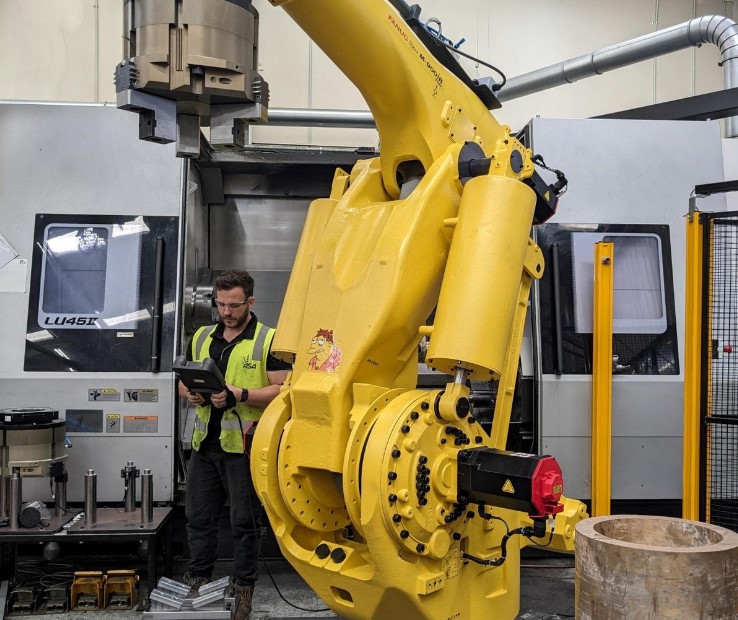
The mechanisms of CNC Machining
CNC machining is a subtractive manufacturing method, meaning it removes material from a block of solid material, or workpiece, to create the shape you want. The process is guided by an application that has been programmed to control the motion of the machine. The code generated for CNC machines differs based on the specific model of machine and the size of the item being made. However, the underlying idea remains the same. the high-speed cutter precisely cuts away any material that is left to create the final product.
CNC machine machining offers many benefits. One of these is its high precision. The digitalization of the process permits incredibly accurate and consistent production, which reduces human error while ensuring uniformity across batches. This level of precision is vital in fields where even smallest deviations can have significant consequences, such as medical devices, aerospace, and automotive manufacturing.
The role of computers that are digital in CNC machine operation
The integration of digital technology is at the heart of CNC machining’s efficiency and accuracy. CNC machines are controlled by specialized software that automates the entire manufacturing process. The software converts computer-aided drawings (CAD) into a set of precise instructions which are then executed by the CNC machine to create the piece. The instructions define everything from the speed and direction of the cutting tool to the angle and depth of every cut.
In larger industrial facilities on a scale, computers can be integrated directly into CNC machines. This allows for seamless communication and control. This integration allows constant adjustments in real time and monitors to ensure maximum performance, as well as reducing the amount of downtime. Automation of CNC machineries also permits continuous operation, thereby significantly improving productivity and decreasing time to market.
CNC Machining Benefits
CNC machining is a great option in comparison to other methods of production. Its ability to produce intricate and complex components with high accuracy is one of the main benefits. CNC machining’s accuracy eliminates the need for manual adjustments or do rework. It decreases waste and increases efficiency. Furthermore, CNC machines can operate continuously, making them ideal for production runs that are large in volume.
Another benefit is the versatility of CNC machining. A single machine can produce different types of parts through merely changing the programming. CNC can be adapted to any need, making it appropriate for prototyping as much in mass production. This allows manufacturers to rapidly respond to changes in market demand.
Automation of CNC processing improves workplace safety. The chance of injuries and accidents are reduced due to eliminating manual interventions. Additionally, the consistency in quality of CNC-machined components improves the product’s durability and efficiency, contributing to the satisfaction of the customer and enhancing credibility of the brand.
CNC Machining Services: Benefits to Industries
CNC machines are used in a myriad of industries, each benefiting from its accuracy, efficiency, and versatility. CNC machines are employed in the aerospace sector for manufacturing vital components that must satisfy rigorous safety and performance requirements. CNC machines are used in the medical device industry for the production of sophisticated surgical instruments and implants. The accuracy of the machine is of prime importance.
CNC machining is used to create engine components and transmissions, as well as intricate interior and exterior elements, and even more complex exterior and interior designs in the automobile industry. Electronics industries also benefit from CNC processing, which allows it to produce small, intricate parts for consumer electronic and communication devices. The art and jewelry industries are also using CNC technology to design individual pieces of jewelry as well as intricate designs.
The future of CNC Machining
CNC machineries are expected to grow as technology advances. Innovations such as multi-axis machining and additive manufacturing integration and the use of advanced materials will continue to push the limits of what is possible with CNC technology. Additionally, machine-learning and AI will enhance CNC processing efficiency.
CNC machining is a powerful tool that has transformed manufacturing and engineering in the present. It has unbeatable precision, flexibility, and effectiveness. The capability to produce complicated parts with high accuracy makes it a vital tool for various industries. CNC machines are expected to continue playing a vital function as technology improves.